

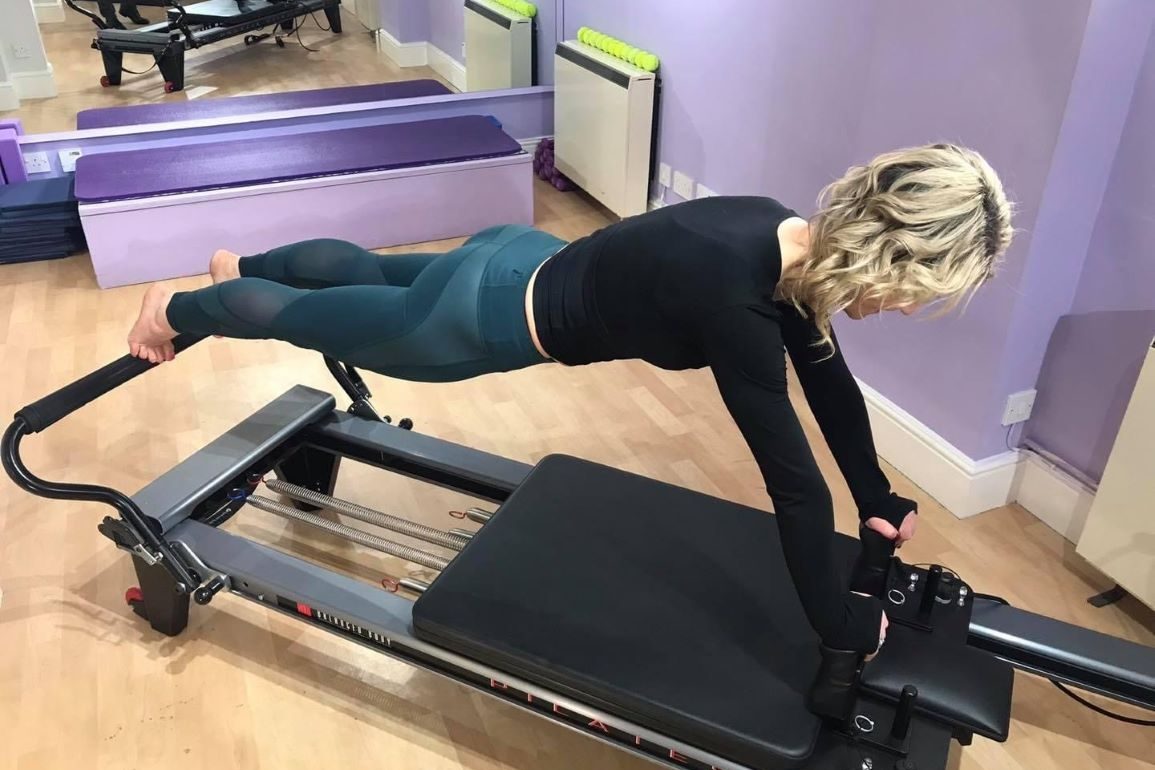
Machine versus Mat
There is evidence that Pilates improves core strength, flexibility, mobility, balance & muscle tone, however which method is best, Mat or Reformer?
Which should I choose?
Both are beneficial to building your core strength & toning your muscles as they train you to initiate the movements from your body’s powerhouse (your core/centering), translating into benefits across your daily activities.
Are the exercises different?
You can perform the same exercises on the reformer as the mat but the Mat classes utilise the body weight for exercises, whilst the Reformer adds resistance to the Pilates exercises via the use of the springs.
Mat work Advantages:
– The basis for the entire Pilates system of exercises working your whole body.
-Your body weight provides resistance against gravity, making the session more challenging & therefore you must be in full control of your body, rather than relying on the assistance or support of the springs/cables of the reformer.
-Mat work is ideal for beginners as it emphasises learning how to control your muscles during exercises. Don’t be fooled, advanced mat classes are the hardest because you’re using your body all the time, the reformer isn’t there assisting or supporting you.
Reformer Advantages:
-Originally designed by Joseph Pilates while living in a World War I internment camp to help rehabilitate immobilised soldiers. It allows a client to exercise in a horizontal plane of motion & not be vertically loaded & weight bearing through the legs e.g. following knee surgery or those with scoliosis.
– It acts as a support system for the body by helping assist it into proper form making it effective for those with injuries or limited range of movement.
It adds resistance to the Pilates exercises via the use of the springs. Extra springs can be added to build strength in the bigger muscle groups, or lower springs can be utilised to challenge the stabilising muscles.
–It is the most versatile piece of kit ever made as the intensity can be varied considerably from one person to the next & it’s great fun despite it looking intimidating & mediaeval at first glance.
-It can provide a more challenging strength and endurance workout than mat classes, leading to visible results sooner. Basically, you can do more exercises on a reformer compared to a mat and it gives you the option of performing exercises in lots of different body positions.
-Reformer Pilates can be for anyone! Whether you are 18 or 86, the Reformer can work with your body’s needs. It can be designed to target one specific area, smaller muscle groups, or as a whole body muscular exercise.
So which one?
Still can’t decide between Mat or Reformer Pilates? There is no need to agonise over the decision; most people will reap similar benefits from both methods. Both will teach you how to effectively use your powerhouse, building strength in your body’s core, which will quickly translate to benefits in your day-to-day activities or sports. While targeting specific muscle groups is possible on the mat, the combinations of exercises aren’t as varied as the reformer. The reformer is also more ideal than the mat for those with injuries or chronic imbalances. The biggest misconception is that Reformer Pilates is harder than Mat Pilates, when in fact it can be the opposite in an advanced class (which will lead to faster results). What is critical is that regular practice is maintained and that the principles of Pilates (breath, centering, concentration, control, precision and flow) are adhered to throughout a class to maximise the results you will see.